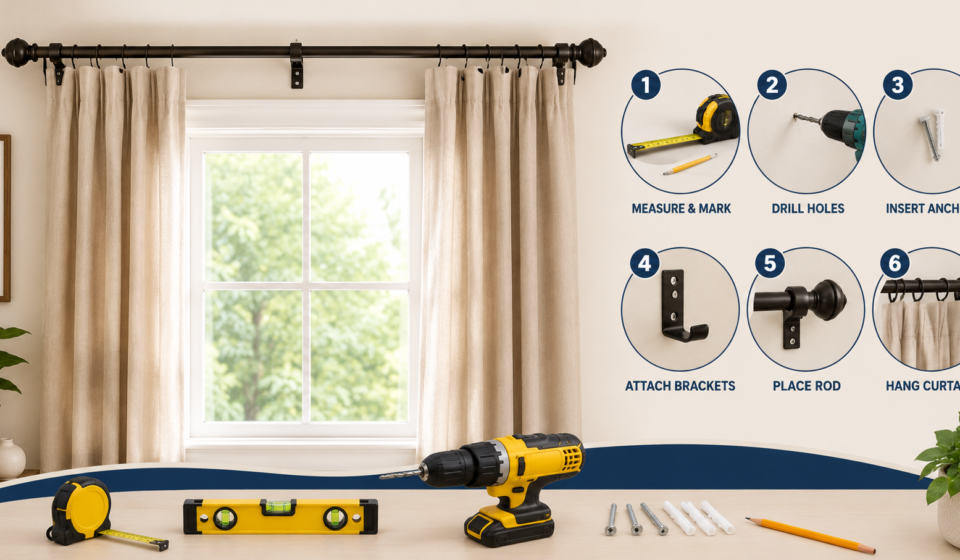

Curtain rods may seem like a small detail in home décor, but proper installation can dramatically improve the appearance, functionality, and overall feel of any room. Whether we are hanging curtains for privacy, light control, insulation, or style, learning how to install a curtain rod correctly ensures professional-looking results that last for years.
This comprehensive guide covers everything needed to install a curtain rod like a professional, even for complete beginners.
Why Proper Curtain Rod Installation Matters
Many homeowners underestimate the importance of curtain rod placement. A well-installed rod not only supports the weight of curtains but also creates the illusion of larger windows and higher ceilings. Incorrect installation can result in crooked curtains, wall damage, or rods that eventually pull away from the wall.
When installed properly, curtain rods:
- Enhance room aesthetics
- Improve natural light control
- Provide better privacy
- Increase energy efficiency
- Extend curtain lifespan
- Create a polished, designer-inspired look
Tools and Materials Needed
Before beginning the installation process, gather the following tools and materials:
Essential Tools
- Measuring tape
- Pencil
- Level
- Power drill
- Screwdriver
- Stud finder
- Ladder or step stool
Required Materials
- Curtain rod
- Mounting brackets
- Screws
- Wall anchors
- Curtains
- Finials (decorative rod ends)
Having all materials ready beforehand makes installation quicker and prevents interruptions.
Choosing the Right Curtain Rod
Not all curtain rods are created equal. Selecting the correct rod depends on curtain weight, window size, and room style.
Lightweight Curtains
Suitable for:
- Sheer curtains
- Voile panels
- Lightweight decorative fabrics
A standard metal or wooden rod is usually sufficient.
Medium-Weight Curtains
Ideal for:
- Cotton curtains
- Linen curtains
- Decorative drapes
Choose a sturdy adjustable rod with strong mounting brackets.
Heavy Curtains
Best for:
- Blackout curtains
- Thermal curtains
- Velvet drapes
Use reinforced rods and center support brackets to prevent sagging.
Determining the Correct Curtain Rod Height
Professional interior designers rarely install rods directly above the window frame. Instead, rods are typically mounted higher to create a larger and more elegant appearance.
Recommended Height
Install the curtain rod:
- 4–12 inches above the window frame
- Closer to the ceiling for a luxurious look
Mounting higher draws the eye upward and makes ceilings appear taller.
Designer Tip
For maximum visual impact, place the rod halfway between the top of the window and the ceiling if space allows.
Determining the Correct Curtain Rod Width
The width of the curtain rod significantly affects both appearance and functionality.
Standard Rule
Extend the rod:
- 6–12 inches beyond each side of the window
This allows curtains to stack neatly outside the window when open.
Benefits
- Makes windows appear wider
- Maximizes incoming natural light
- Creates a balanced appearance
For large windows, extending the rod even farther can produce a dramatic designer effect.
Step 1: Measure the Window Carefully
Accurate measurements are the foundation of successful curtain rod installation.
Measure:
- Window width
- Desired rod width
- Height above the window frame
Use a measuring tape and record dimensions before marking the wall.
Double-check all measurements to avoid costly mistakes.
Step 2: Mark Bracket Locations
Using a pencil, mark where each mounting bracket will be installed.
Best Practice
- Ensure both marks are level
- Maintain equal distance from the window edges
- Confirm measurements before drilling
A level is crucial during this stage to prevent uneven curtain placement.
Step 3: Locate Wall Studs
Curtain rods supporting heavy curtains should ideally be anchored into wall studs.
Use a stud finder to identify:
- Wood studs
- Structural support points
Mark stud locations clearly.
When No Stud Is Available
If brackets cannot be mounted directly into studs, use high-quality wall anchors to ensure adequate support.
Step 4: Drill Pilot Holes
Once bracket positions are confirmed:
- Place the drill bit on the marked locations.
- Drill pilot holes carefully.
- Keep the drill straight and steady.
Pilot holes make screw installation easier and reduce the risk of wall damage.
Step 5: Install Wall Anchors
For drywall installations without studs:
- Insert wall anchors into pilot holes.
- Tap gently with a hammer if needed.
- Ensure anchors sit flush with the wall.
Proper anchors significantly improve stability and weight-bearing capacity.
Step 6: Secure the Mounting Brackets
Position each bracket over the pilot holes.
Using screws:
- Attach brackets firmly
- Tighten securely
- Avoid overtightening
After installation, gently test the brackets for movement.
A properly mounted bracket should feel solid and secure.
Step 7: Assemble the Curtain Rod
Before hanging the rod:
- Attach finials
- Adjust rod length
- Confirm all components are secure
Many adjustable rods can be extended to match the measured window width.
Follow manufacturer instructions for assembly.
Step 8: Thread Curtains onto the Rod
Depending on curtain style:
Rod Pocket Curtains
Slide the rod through the fabric pocket.
Grommet Curtains
Insert the rod through the metal rings.
Tab Top Curtains
Feed the rod through the fabric tabs.
Arrange curtain panels evenly before mounting.
Step 9: Place the Rod onto the Brackets
Carefully lift the assembled rod and position it on the mounted brackets.
Ensure:
- Rod sits securely
- Curtains move smoothly
- Brackets fully support the rod
For longer rods, install a center support bracket to prevent bending.
Step 10: Final Adjustments
After installation:
- Open and close curtains several times
- Adjust fabric folds
- Verify rod levelness
- Tighten loose screws if necessary
Proper adjustments create a polished, professional appearance.
Common Curtain Rod Installation Mistakes to Avoid
Installing the Rod Too Low
This makes ceilings appear shorter and windows look smaller.
Using the Wrong Anchors
Weak anchors can fail under curtain weight.
Ignoring Level Measurements
Crooked rods immediately draw attention and diminish room aesthetics.
Choosing a Rod That’s Too Short
Short rods make windows appear cramped and reduce available natural light.
Skipping Center Supports
Long curtain rods without center support often sag over time.
Professional Styling Tips
Use Wider Curtain Panels
Fuller curtains create a luxurious appearance.
Hang Curtains High
Mounting rods closer to the ceiling enhances room height.
Choose Decorative Finials
Finials add character and elevate the overall design.
Match Hardware Finishes
Coordinate curtain rod finishes with:
- Door handles
- Light fixtures
- Cabinet hardware
This creates a cohesive interior design.
How to Install Curtain Rods on Different Wall Types
Drywall
Use heavy-duty wall anchors when studs are unavailable.
Brick Walls
Use masonry drill bits and masonry anchors.
Concrete Walls
Install concrete anchors and use a hammer drill.
Wood Surfaces
Wood screws generally provide excellent holding strength without anchors.
Maintaining Your Curtain Rod
To keep curtain rods looking and functioning like new:
- Dust regularly
- Tighten screws annually
- Check bracket stability
- Clean decorative finials
- Replace damaged hardware promptly
Routine maintenance extends the lifespan of both rods and curtains.
Conclusion
Installing a curtain rod like a professional is a straightforward project when approached methodically. By selecting the correct hardware, taking precise measurements, securing brackets properly, and positioning the rod strategically, we can achieve a polished, high-end look that enhances any room. Following these step-by-step instructions ensures sturdy installation, smooth curtain operation, and a stylish finish that transforms ordinary windows into beautiful focal points.
Thank you for reading this guide. For more home improvement, DIY, interior design, and home décor tips, stay connected and explore our latest articles.