Introduction
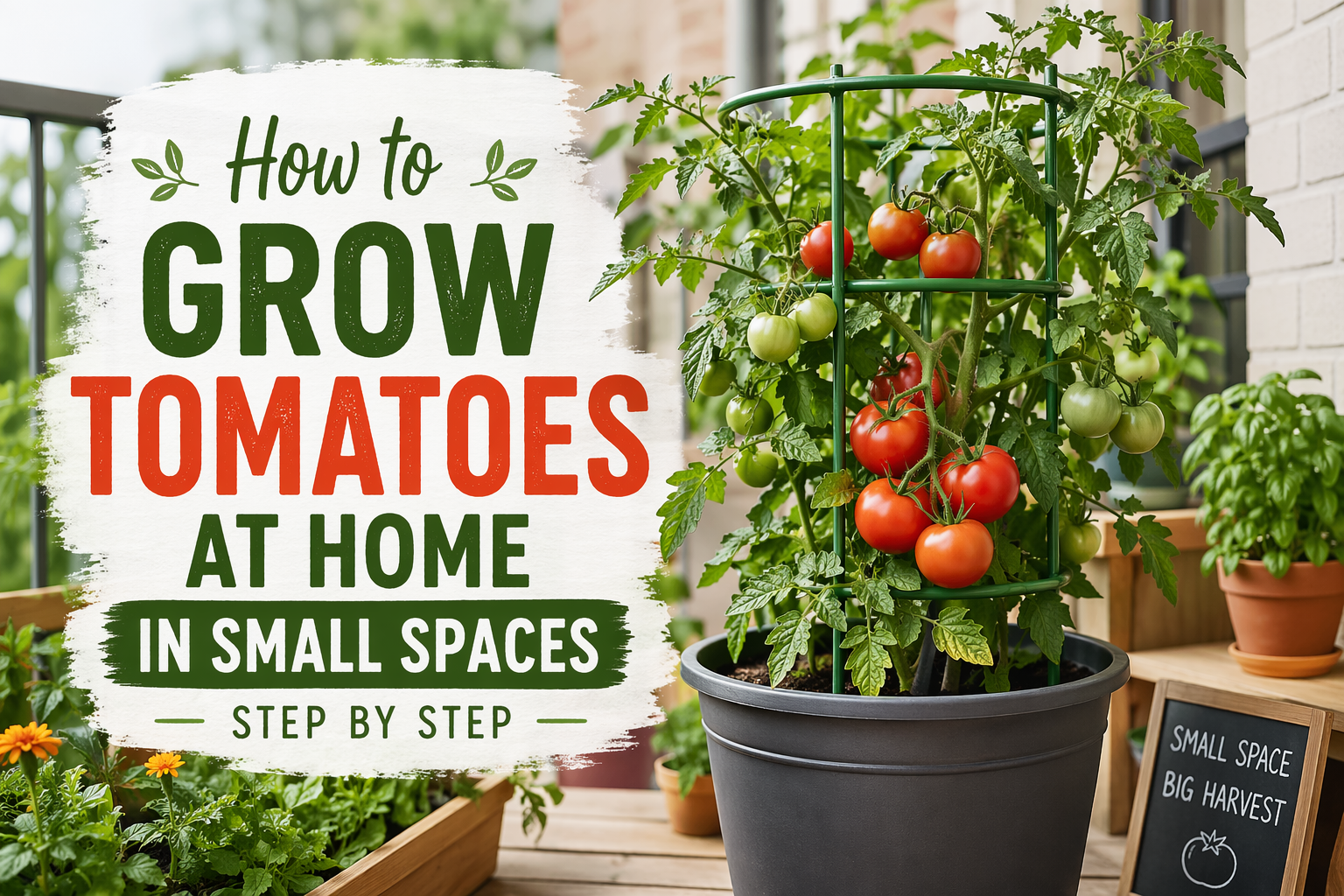
If you’ve ever thought about growing your own food but felt limited because of space, you’re not alone. Many people believe gardening needs a big backyard — but that’s not true anymore. The good news is, once you learn How to Grow at Home Tomatoes, even a small balcony, terrace, or window can turn into a mini farm.
Tomatoes are one of the easiest and most rewarding vegetables to grow at home. They don’t need much space, they grow fast, and nothing beats the taste of fresh, homegrown tomatoes.
In this guide, I’ll walk you through everything step-by-step in a simple, practical way so even a complete beginner can get started.
Why Grow Tomatoes at Home in Small Spaces
Before we jump into the steps, let’s quickly understand why this is worth it.
- Fresh and chemical-free tomatoes
- Saves money in the long run
- Perfect for small homes and apartments
- Relaxing and stress-relieving activity
- You control the quality of your food
Once you understand How to Grow at Home Tomatoes, you’ll never look at store-bought tomatoes the same way again.
Choose the Right Tomato Variety
Not all tomatoes are suitable for small spaces. You need compact varieties that grow well in pots.
Best options for small spaces:
- Cherry tomatoes
- Dwarf or bush varieties
- Balcony tomatoes
Pro Tip: Cherry tomatoes are the easiest for beginners. They grow quickly and produce lots of fruit.
Select the Right Container
Since you’re working with limited space, choosing the right container is very important.
What you can use:
- Plastic pots
- Grow bags
- Buckets
- Recycled containers
Ideal size:
- Minimum 10–12 inches deep
- Good drainage holes
Tomatoes need space for roots, so don’t use very small pots.
Prepare the Perfect Soil Mix
Soil plays a huge role in how well your tomatoes grow.
Best soil mix:
- 40% garden soil
- 30% compost (organic)
- 30% cocopeat or sand
This mix keeps the soil:
- Nutrient-rich
- Well-drained
- Light and airy
Avoid using heavy or clay soil — it can damage plant roots.
Planting the Seeds or Saplings
Now comes the exciting part — planting.
Option 1: Using seeds
- Sow seeds 1–2 cm deep
- Keep soil moist
- Seeds will sprout in 5–10 days
Option 2: Using saplings (recommended for beginners)
- Buy a small plant from a nursery
- Plant it directly in your pot
If you’re new, start with saplings. It’s faster and easier.
Step 5: Sunlight is Everything
Tomatoes love sunlight. Without it, they won’t grow properly.
Requirement:
- 6–8 hours of direct sunlight daily
Best places:
- Balcony
- Terrace
- Near a sunny window
If your space doesn’t get enough sunlight, growth will be slow.
Watering the Right Way
Watering sounds simple, but this is where most beginners go wrong.
How to water properly:
- Water once daily (morning is best)
- Keep soil moist, not soggy
- Avoid overwatering
Signs of overwatering:
- Yellow leaves
- Weak plants
Stick your finger into the soil — if it feels dry, water it.
Support Your Tomato Plants
As tomato plants grow, they need support to stay upright.
Use:
- Wooden sticks
- Bamboo sticks
- Tomato cages
Tie the plant gently as it grows.
This prevents damage and helps better fruit production.
Fertilizing for Better Growth
To get juicy and healthy tomatoes, your plant needs nutrients.
Natural fertilizers:
- Compost
- Vermicompost
- Banana peel fertilizer
- Cow dung manure
When to fertilize:
- Every 10–15 days
Avoid chemical fertilizers if you want organic tomatoes.
Pest Control (Keep It Natural)
Small pests can attack your tomato plants, especially in home setups.
Common pests:
- Aphids
- Whiteflies
- Small worms
Natural solutions:
- Neem oil spray
- Soap water spray (mild)
Spray once every 7 days for protection.
Regular checking is important — catch problems early.
Pruning for Better Yield
Pruning means removing extra leaves or branches.
Why it’s important:
- Improves airflow
- Helps plant focus on fruit growth
- Prevents disease
Remove:
- Yellow leaves
- Weak branches
Don’t overdo it — just keep the plant clean and healthy.
Flowering and Fruit Stage
After a few weeks, your plant will start flowering — this is a good sign.
What happens next:
- Flowers turn into small green tomatoes
- Gradually they grow and change color
Be patient — this stage takes time but is very rewarding.
Harvesting Your Tomatoes
Finally, the best part — harvesting.
When to harvest:
- When tomatoes turn red (or based on variety color)
- Firm but slightly soft
Use scissors or gently twist to remove.
Fresh homegrown tomatoes taste way better than market ones — you’ll notice the difference instantly.
Common Mistakes to Avoid
Even if you follow everything, small mistakes can affect your results.
Avoid these:
- Overwatering
- Using poor soil
- Not enough sunlight
- Skipping fertilization
- Ignoring pests
Gardening is all about observation — your plant will tell you what it needs.
Final Tips for Success
If you truly want to master How to Grow at Home Tomatoes, keep these simple tips in mind:
- Start small (1–2 plants)
- Be consistent with care
- Use organic methods
- Stay patient
- Enjoy the process
Conclusio,
Learning How to Grow at Home Tomatoes is not just about gardening — it’s about creating something with your own hands. Even in a small space, you can grow fresh, healthy tomatoes without any chemicals.
You don’t need expensive tools or a big garden. Just a pot, some soil, sunlight, and a little care — that’s enough to get started.
Once you harvest your first batch, trust me, you’ll feel proud — and you’ll want to grow even more.